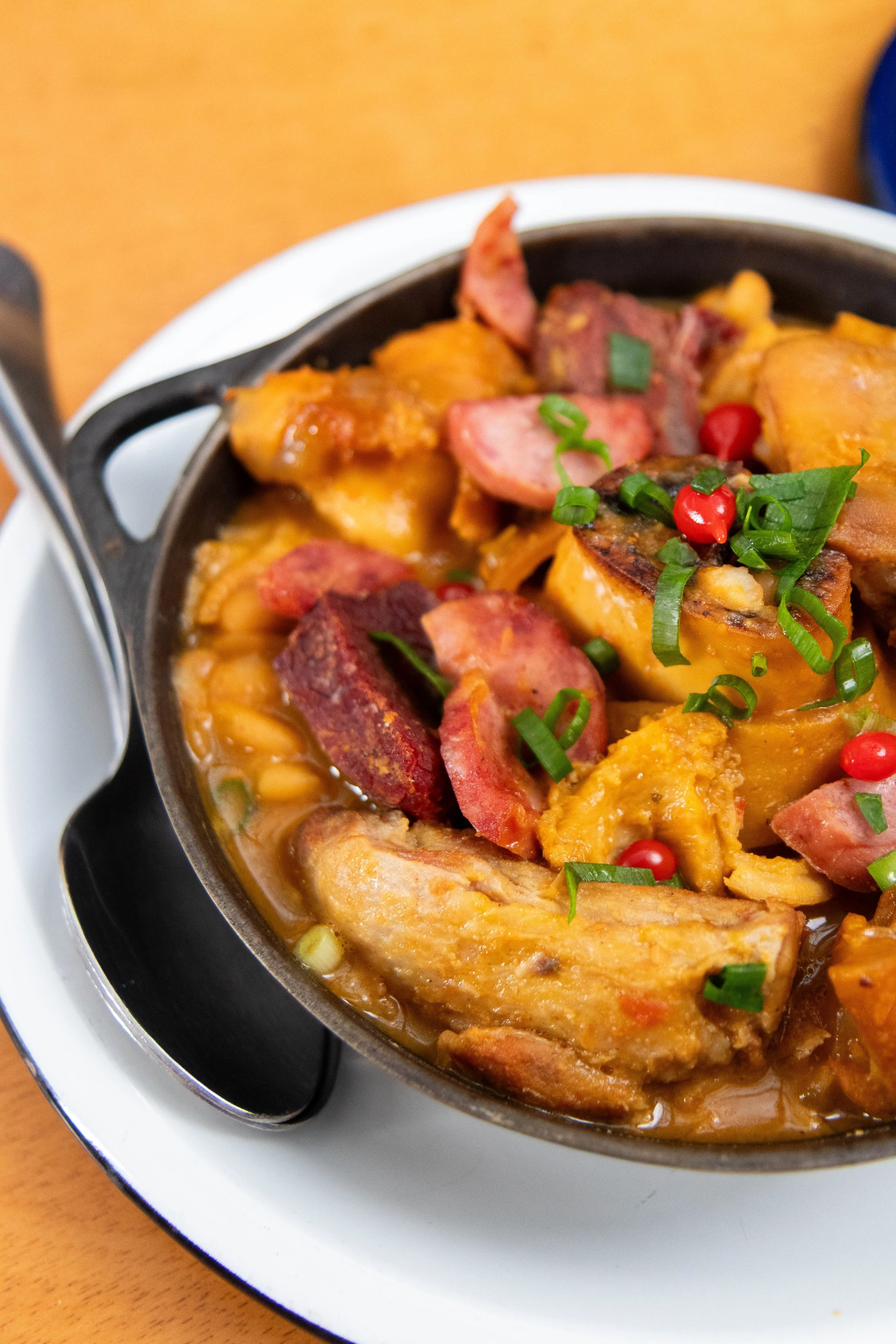
Cassoulet, Carcassonne, and a 700-Year Argument Over Beans
Order cassoulet in Carcassonne and the waiter may mention, unprompted, that this version is not the one from Castelnaudary and certainly not the one from Toulouse. He will say this the way a South Carolinian might clarify that this is Carolina barbecue, not Texas barbecue — politely, but as if the distinction were truly significant (because it is).
Three towns within about sixty miles of each other — Castelnaudary, Carcassonne, and Toulouse — have spent close to a century arguing in print about which one invented the true cassoulet, and the argument has never really been settled so much as formalized. In 1929, the food writer Prosper Montagné, trying to broker peace, issued a decree instead: Castelnaudary's version is le Père (God the Father), Toulouse's is le Saint-Esprit (the Holy Spirit), and Carcassonne's is le Fils (God the Son). It is a joke with the structure of theology, and it has outlived plenty of things that took themselves more seriously.
A legend from the Hundred Years' War
The dish itself is older than the argument. The most common origin story places it in the fourteenth century, during the siege of Castelnaudary in the Hundred Years' War — as the story goes, the townspeople, cut off and running low on food, threw whatever they had left into one large pot: beans, salted pork, scraps of poultry. To be clear, this is legend, not documented history, in the same way George Washington and the cherry tree is legend — a good story that historians can't actually source. What is documented is the cooking vessel: a deep, glazed earthenware dish called a cassole, reportedly made by an Italian potter working near Castelnaudary, which gave the dish its name (cassolet in Occitan, worn down over time to cassoulet). And the beans themselves are a later addition than most people assume — the original recipes used dried fava beans, and it wasn't until the white haricot bean arrived from the Americas in the sixteenth century, brought back by Spanish explorers, that cassoulet became the dish we'd recognize today.
Why three towns still argue about cassoulet
Once the beans were settled, the meat became the battleground. Castelnaudary's version — the "father," the oldest claim — is built on duck or goose confit, pork shoulder, pork rind, and fresh sausage, using the haricot lingot beans still grown locally in the Lauragais and now protected under an official IGP label. Toulouse's version adds its famous coarse-ground pork sausage and sometimes carrots and onion studded with cloves — a slightly dressier bouillon for a bigger city. Carcassonne's version is the one that breaks the pattern: leg of mutton, and, when it's in season, red-legged partridge from the surrounding garrigue.
What makes Carcassonne's cassoulet different
It is, tellingly, the only one of the three that reaches for game instead of poultry fat — which tracks. Carcassonne has always been the fortress town, not the market town, and its cassoulet tastes like a place that hunted before it farmed. I find something quietly apt in Carcassonne getting cast as the middle child of this trinity — the version named for the Son rather than the Father, defined in relation to the other two rather than as the unquestioned original. It's a fair description of the town more broadly. Castelnaudary has the origin claim; Toulouse has the size and the sausage. Carcassonne has the walls, the mutton, and the quiet insistence that its way is the correct one, argued not with volume but with staying power. Seven hundred years into this dispute, nobody has backed down.
Why it matters if you're moving here
None of this is really about beans. It's about the fact that a genuinely small region — you could drive between all three towns in under two hours — has maintained three distinct culinary identities for centuries, well after national food culture might have been expected to flatten them into one. That's the thing worth sitting with if you're the kind of person moving to this part of France for more than the view: the differences are specific, they are defended, and they are older than the country's current borders. You are not moving to French food. You are moving to a small, particular argument that happens to be delicious.
Next time you're at a table in the old city and the cassoulet arrives dark, rich, and faintly gamey, you'll know why it doesn't taste like the version in Toulouse. It isn't supposed to.