Toulouse, France: Inside the History and Culture of the Pink City
If you've fallen for Carcassonne — its stone ramparts, its slower rhythm, its sense of having stepped sideways out of time — you owe it to yourself to take the drive north. An hour up the A61 from Carcassonne, the medieval fortress gives way to something entirely different: Toulouse, France, a city of pink brick, Renaissance wealth, and Occitan pride that has spent two thousand years becoming one of the most historically layered cities in the south of France.
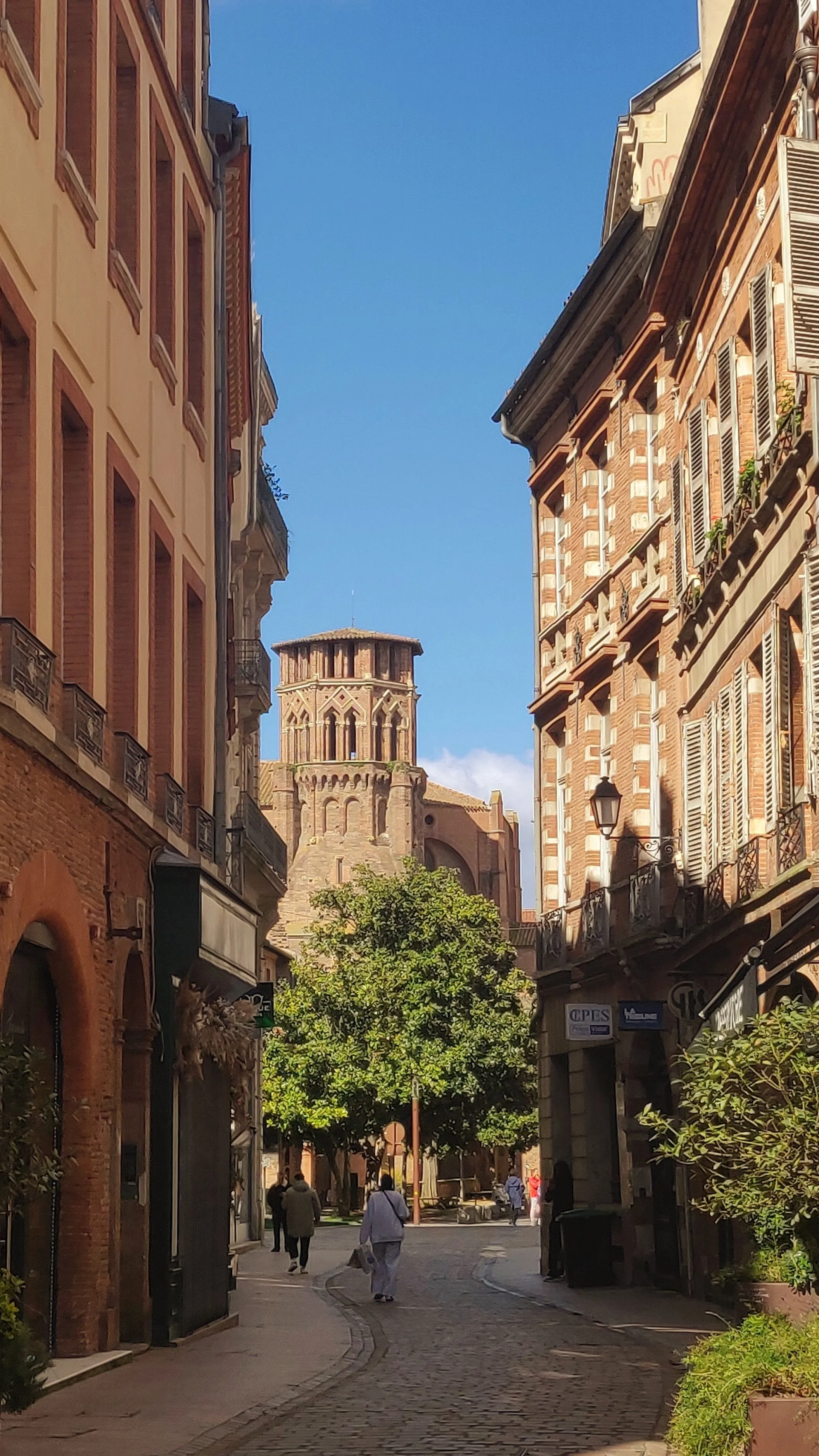
Locals call it la Ville Rose — the Pink City — and the nickname is the first lesson in Toulouse history: this is a city defined, quite literally, by what it's built from.
Why Is Toulouse Called "The Pink City"?
Toulouse sits on the Garonne River in a part of France with no local stone quarry worth the name. For eight centuries, builders here turned to terracotta brick instead — and at sunset, when the light lowers itself across the Place du Capitole, entire facades seem to glow from within: rose, amber, dusty gold. It's a color you don't quite believe until you've stood in it. That warm brick is Toulouse's signature, and it's why photographs of the city are instantly recognizable across France.
Roman Roots and Medieval Wealth: A Short History of Toulouse
Toulouse's history didn't start with brick. The Romans settled here because the Garonne was navigable and the surrounding plain was fertile — Toulouse (then Tolosa) became one of Roman Gaul's most important cities, and its street grid still echoes that ancient footprint today.
By the Middle Ages, Toulouse had grown wealthy on an unlikely commodity: woad, the blue dye that, before indigo arrived from the Americas, was Europe's only reliable source of true blue. Woad money built some of the most sophisticated private mansions — hôtels particuliers — in France, many of which still line the streets of the old city.
Religious history runs just as deep. The Basilique Saint-Sernin, the largest Romanesque church surviving in Europe, is a masterpiece of medieval engineering, built to funnel pilgrim crowds toward Santiago de Compostela without ever causing a bottleneck. Few visitors expect a triumph of eleventh-century crowd control. Toulouse has one anyway — and it's a UNESCO World Heritage Site.
Occitan Culture: The Living Identity Behind the Architecture
Toulouse isn't just a historical showcase — it's the informal capital of Occitan culture, the language and identity of southern France that predates modern French by centuries. You'll still hear Occitan on street signs, in festival names, and in the region's fierce, good-humored local pride. This is Gascon and Occitan country, distinct in accent, cuisine, and temperament from Paris — and that distinctiveness is part of what makes the Occitanie region, from Toulouse down to Carcassonne, feel like a coherent cultural world rather than a random stretch of French geography.
A City That Built the Future on Top of Its Past
What makes Toulouse remarkable today isn't only that it preserved its past — plenty of French cities do that — it's what the city built on top of it. This is Airbus territory. Toulouse is, alongside Seattle, one of the two genuine capitals of world aviation, and that industry has pulled in engineers, researchers, and a university population that makes Toulouse one of the youngest big cities in France. The result is a place with the visual gravity of a medieval capital and the pulse of a city genuinely building what comes next.
That combination shows up in its museums and public life: the Cité de l'Espace turns the aerospace legacy into one of France's best science museums; the Musée des Augustins tucks a serious Gothic and Romanesque sculpture collection into a former Augustinian convent; and the Canal du Midi — Pierre-Paul Riquet's seventeenth-century engineering triumph linking the Atlantic to the Mediterranean — begins its run to the sea right here, tree-lined and still used for unhurried Sunday boat traffic four centuries after it was dug.
Toulouse Food Culture: Cassoulet, Markets, and the Famous Violet
Toulouse takes its food as seriously as its history. This is cassoulet country, sausage country, foie gras and Armagnac country — but it's also a city with enough energy and enough students to support wine bars that wouldn't feel out of place in Paris, and a market culture (try Marché Victor Hugo on a Saturday morning) that rewards anyone willing to show up hungry and curious. The famous violette de Toulouse — a crystallized violet flower that turns up in everything from chocolates to liqueur — is a small, strange, wonderful local obsession, and a good excuse to strike up a conversation with a shopkeeper.
Toulouse and Carcassonne: An Hour That Changes the Math
For anyone weighing a life in this part of France, Toulouse matters more than its distance from Carcassonne suggests. It's the region's transit hub, with direct flights across Europe and a TGV line to Paris. It's where you'd go for a proper hospital, a full university, a symphony season, a genuine job market beyond the tourist economy. Carcassonne gives you the fortress, the vineyards, and the quiet; Toulouse gives you the airport, the opera, the emergency room, and — not incidentally — real intellectual and cultural sophistication within easy striking distance.
That's the real case for this corner of France. It isn't a choice between a postcard and a city. It's an hour of French countrysi
de connecting one to the other — and very few places in the world let you have both.
Have you spent time in Toulouse? I'd love to hear what struck you about it.